
How to sell sound kits in India: a 2026 guide
How to sell sound kits, drum kits and sample packs online in India: what to put in a kit, how to price it in money or Aircoins, licences, and selling on Airtune.
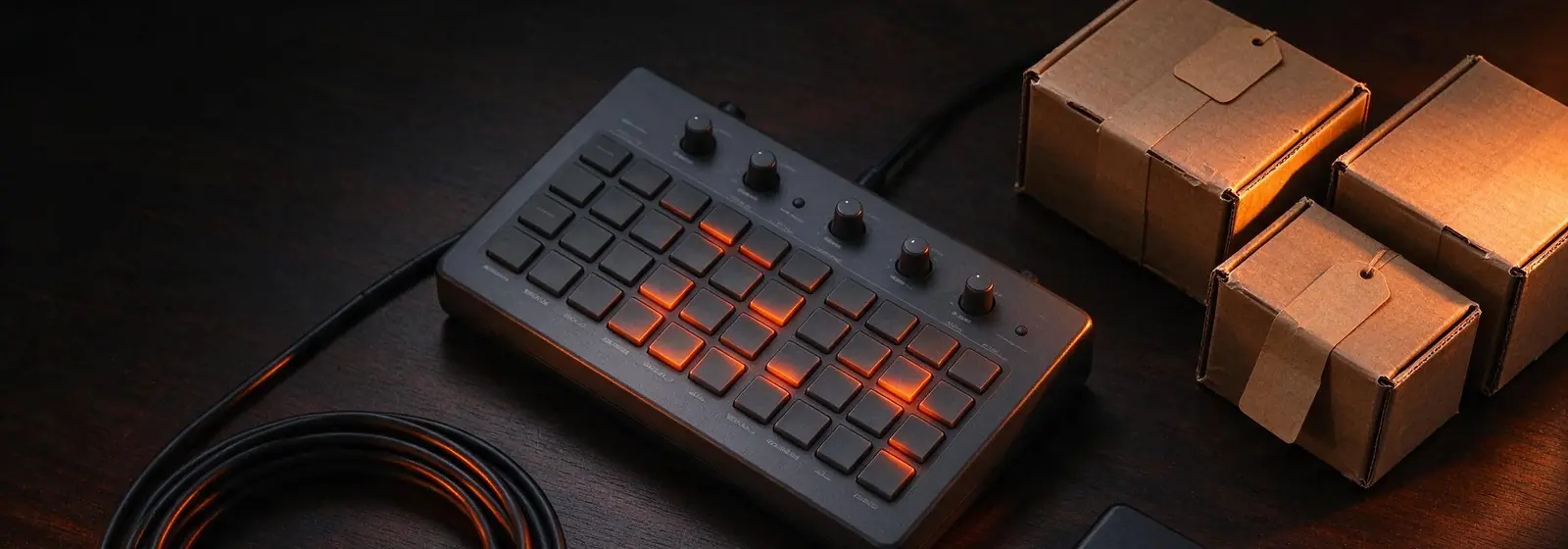
How to sell sound kits: make sounds that are 100% yours, package them in a clean ZIP with a short demo, pick a licence, set a price, and list the kit on a store that pays you. On Airtune, producers sell kits for money, plus optional Aircoins, from 1 kit a month on Studio Starter to unlimited on Studio Pro.
On this page
How to sell sound kits starts with one rule: every sound in the kit must be yours to sell. Then you package the sounds well, choose a licence, set a price and list the kit where producers shop. This guide covers each step, with the selling rules, plan limits and fees on Airtune, a beat store made in India.
In short
- Only sell sounds you made or have written rights to resell.
- A clear licence sells kits: say if it is royalty-free and if credit is needed.
- On Airtune, kits sell for money, and you can also accept Aircoins, with plan limits on uploads.
What do you need before you sell sound kits?
Before you sell sound kits, you need sounds you own, a clear folder structure, a short demo and a licence. Ownership comes first. If a kick or loop came from someone else’s kit, you almost never have the right to resell it, even if you processed it.
Most kit licences ban exactly this. Airtune’s own Loop & Sample License, for example, says buyers may not sell or share a loop on its own or inside a sample pack. Expect other stores’ licences to say the same. So record, synthesise or design your sounds yourself, and keep your project files as proof.
Next, plan what kind of kit it is. Airtune lists six pack types: sound kit, drum kit, sample pack, preset pack, beat pack and loop pack. A focused kit, such as “drill drums” or “Punjabi percussion loops”, is easier to describe and easier to sell than a mixed folder. Our guide to drum kits in India shows what buyers expect inside one.
- Your own sounds, with project files saved as proof.
- One clear theme per kit, so buyers know what they get.
- WAV files, named by type, key and BPM where it applies.
- A short audio demo that shows the kit in a real beat.
- A licence that says what buyers can and cannot do.
How do you make a sound kit people want to buy?
You make a sound kit people want to buy by solving one problem well, labelling every file clearly, and letting buyers hear it before they pay. Producers buy kits to save time. A kit that needs no sorting, no level fixing and no guessing about keys gets used, and gets talked about.
Quality beats quantity. Thirty strong, mixed, ready-to-use sounds are worth more than three hundred rough ones. Trim silence, match loudness across the kit, and name files like “Kick_Punchy_01” or “Loop_Sitar_Dm_140bpm”. Put drums, loops, one-shots and MIDI in separate folders.
The demo does most of the selling. Make a short beat using only the kit, and say so. Post clips on Instagram and YouTube showing one sound at a time going into a beat. Our guide to sound kits in India shows what buyers check before they pay, so build your listing around those points.
- Pick a theme a producer would search for.
- Make and mix the sounds so levels match across the kit.
- Name every file with type, key and BPM.
- Sort into folders: drums, loops, one-shots, MIDI, presets.
- Make a demo beat that uses only the kit.
- Write the listing: what is inside, file count, formats and licence.
How do you price sound kits in India?
You price sound kits in India by looking at what similar kits cost, how many sounds yours has, and how much time it saves a buyer. A small, focused kit from a new producer often sells best at a low price. Raise prices as your name and reviews grow.
On Airtune, there is no minimum price for kits and packs, so you choose freely. A kit always has a money price, and “Cash + AirCoins” also lets buyers pay in Aircoins. For Aircoins, the rupee price must be a multiple of ₹10, and the Aircoin price is the rupee price divided by 10. A ₹490 kit, for example, costs 49 Aircoins.
Commission depends on your Studio plan. On the Airtune pricing page (checked 8 Nov 2026), it is 20% on Studio Starter, 15% on Studio Lite, 10% on Studio and 0% on Studio Pro, which includes Legacy. The payment provider’s fee shows on its own line. Prices are tax-inclusive, and tax on your earnings is your responsibility.
Your choice: You are not obligated to accept Aircoins. Leave a kit on “Cash” and buyers pay only in money. Aircoin is a separate way to pay, not a discount, so a buyer paying 49 Aircoins for your ₹490 kit pays the same value.
| Plan | Commission on a ₹490 kit | You keep before the payment fee |
|---|---|---|
| Studio Starter | ||
| Studio Lite | ||
| Studio | ||
| Studio Pro (incl. Legacy) |
Worked example. You sell ten copies of a ₹490 drum kit on Studio, so buyers pay ₹4,900 in total. Commission at 10% is ₹490.00, leaving ₹4,410.00 before the payment provider’s fee. Our guide on how much to charge for beats uses the same thinking for beat prices.
How do you sell sound kits and loops on Airtune?
You sell sound kits and loops on Airtune from Airtune Studio. Producers join by invite, then upload each kit as a ZIP product with its own page, price and licence. Kits appear on your storefront and in Airtune sound kits, where producers browse.
Each plan has an upload limit for kits and packs. Studio Starter allows 1 a month, Studio Lite and Studio allow 5 a month, and Studio Pro allows unlimited. Single loops and samples are a separate product. A loop can be free (the buyer follows you), 1 Aircoin, or paid at your own price. Selling paid loops needs Studio Pro or Legacy.
Every single loop uses the Airtune Loop & Sample License, so buyers get the same rights whatever they pay. It allows commercial use in unlimited songs, but no reselling the raw loop, no Content ID claims and no AI training. Kit sales are final under the Refund Policy, except for genuine problems such as broken files, so describe your kit honestly.
| Plan | Kits and packs | Single loops |
|---|---|---|
| Studio Starter | 1 a month | Free or 1 Aircoin |
| Studio Lite | 5 a month | Free or 1 Aircoin |
| Studio | 5 a month | Free or 1 Aircoin |
| Studio Pro (incl. Legacy) | Unlimited | Free, 1 Aircoin or your price |
What licence should a sound kit have?
A sound kit should have a short, plain licence that says whether the sounds are royalty-free, whether credit is needed, and what buyers cannot do. Buyers want to know they can use your sounds in songs they release and sell, without paying you again or getting a copyright claim later.
Most producers sell kits royalty-free. That means buyers pay once and can use the sounds in their own music without paying royalties. Royalty-free does not mean “do anything”. Kit licences usually ban reselling the raw sounds, and many ban Content ID claims on songs that use them, because a claim would hit every buyer at once.
On Airtune, each kit comes with its own licence, shown to the buyer before they pay. Read it as a seller too, so your listing matches it. If you want credit, say so in the listing. Our guide to loops and samples in India explains how buyers read these licences.
- Royalty-free or not: say it in the first line.
- Credit: required, appreciated or not needed.
- Banned uses: reselling raw sounds, Content ID claims.
This is general information, not legal advice. For a big deal, ask a music lawyer.
How do you get paid and sell more kits?
You get paid for sound kits on Airtune through your wallet. Each sale clears for 7 days when paid in rupees, or 14 days when paid in US dollars. Cleared money becomes available the following Friday and is paid in rupees to your verified UPI or bank account, on that Friday’s payday or whenever you tap Withdraw.
The Airtune team checks every payout, and there is no minimum payout. You need KYC and PAN details in place first. If a buyer pays in Aircoins, you earn Aircoins, which you can spend on Airtune. Our Aircoin guide explains how earned Aircoins work.
To sell more, give producers a reason to try you. A free loop that needs a follow builds an audience you can sell kits to later. Share short sound demos on Instagram, and link the kit from your bio. Studio Lite and above also get broadcast emails to followers, which suit a new kit launch.
Tip: Sound kits and packs carry a rupee price and a US dollar price, so buyers in India and abroad can both pay in their own currency.
Next steps
- See what buyers check in sound kits in India.
- Learn how Aircoin prices work in the Aircoin guide.
- Compare kit limits and commission on the Airtune pricing page.